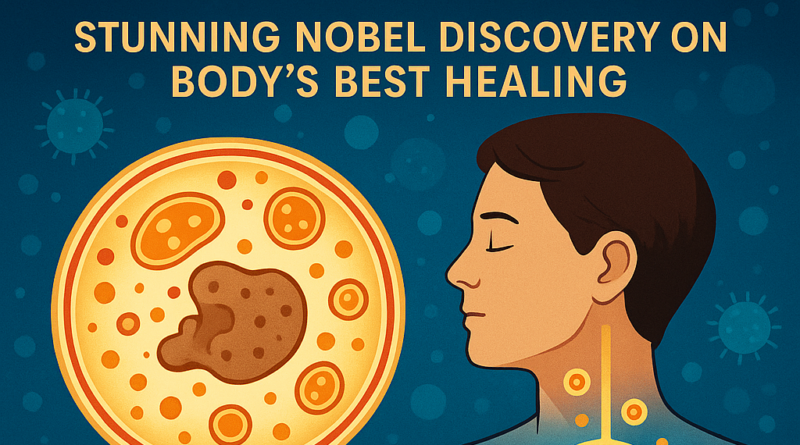
Autophagy Breakthrough: Stunning Nobel Discovery on Body’s Best Healing
A Japanese scientist revolutionized our understanding of the human body’s ability to survive, heal, and renew itself at the most fundamental level. Yoshinori Ohsumi’s pioneering research unveiled a hidden survival system operating inside our cells, activating especially during times of food scarcity. This discovery transformed modern biology and medicine, revealing that our bodies possess an elegant, efficient mechanism to maintain health by recycling their own damaged or dysfunctional components.
The Hidden Survival System Inside Our Cells
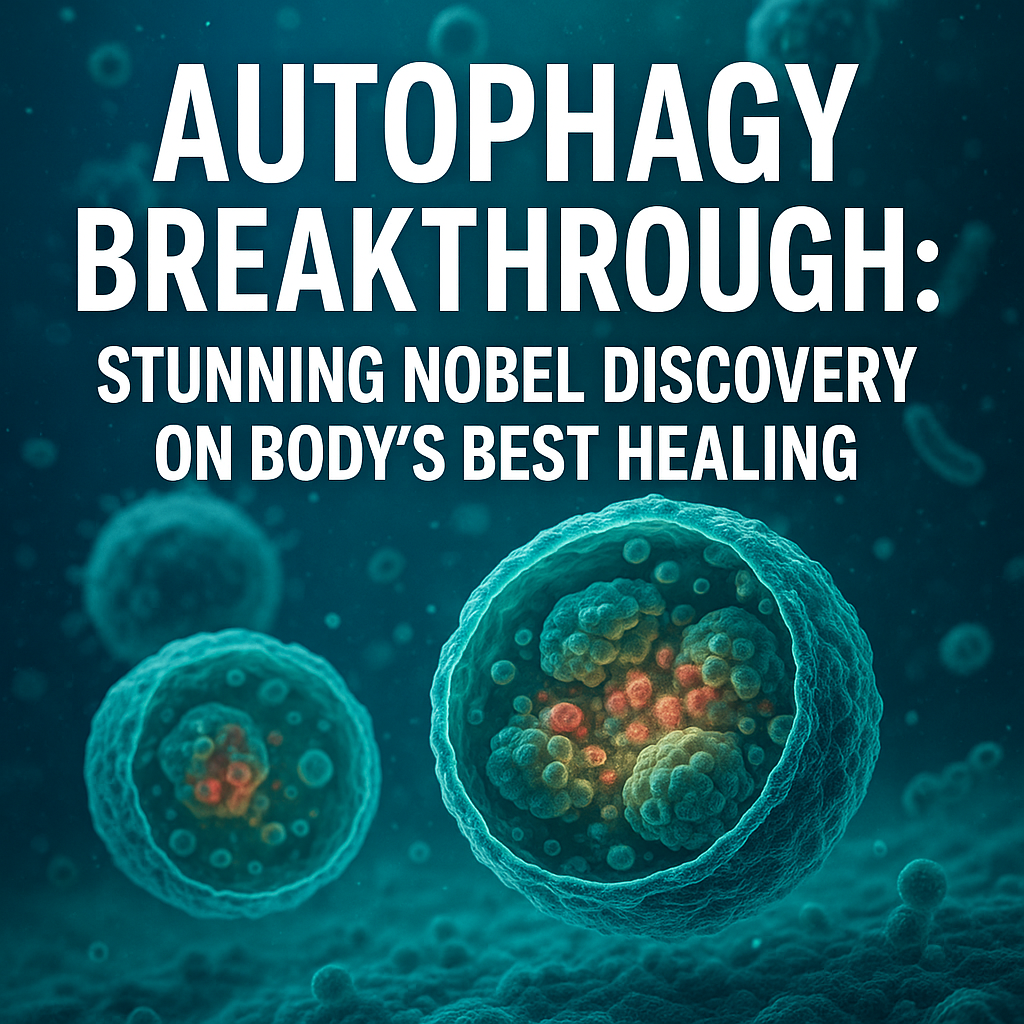
At the heart of Ohsumi’s work is a process known as autophagy, derived from Greek words meaning “self-eating.” While scientists long knew that cells could degrade and recycle their parts, the precise mechanics and significance of the process were unclear. Ohsumi’s groundbreaking experiments demonstrated how autophagy is a carefully regulated cellular program that kicks in during periods of fasting or nutrient deprivation.
Instead of simply letting waste and damaged molecules accumulate, cells activate autophagy to break down these components. The resulting fragments are then reused as energy sources or raw materials for rebuilding essential cellular machinery. This self-cleaning process acts like a biological reset button, clearing away debris and allowing the cell, and thus the entire organism, to sustain vital functions even under stress.
How Ohsumi Mapped Genes and Showed Autophagy’s Importance
What made Ohsumi’s research truly transformative was his methodical approach to identifying the genes responsible for autophagy. Using yeast cells as a model system, he mapped the key genes that control this self-digesting pathway. His findings proved autophagy isn’t just a survival gimmick but a fundamental and conserved biological process crucial for life.
By understanding this genetic blueprint, scientists could now explore how autophagy influences broader health aspects—ranging from cellular maintenance and immunity to aging and disease resistance. Without this recycling system, cells would accumulate toxic buildup, leading to dysfunction and disease.
The Impact on Health, Aging, and Disease Prevention
Ohsumi’s discoveries have reshaped how researchers view the body’s response to hunger and stress. Instead of weakness, fasting activates a smart internal housekeeping routine that promotes cellular renewal and resilience. This insight has major implications across many medical fields.
Cancer and Autophagy
Autophagy plays a dual role in cancer. On one hand, it helps prevent tumor formation by removing damaged components that could trigger mutations. On the other hand, some tumors exploit autophagy to survive under harsh conditions. Understanding this balance has opened new avenues for targeted cancer treatments.
Neurodegenerative Disorders
Diseases like Alzheimer’s and Parkinson’s involve the accumulation of misfolded proteins and damaged organelles. Boosting autophagy can help clear these toxic buildups, offering potential therapeutic strategies to slow or halt progression.
Inflammation and Immunity
Autophagy regulates inflammatory responses and supports immune cell function, thus contributing to a balanced defense system. Defects in this process have been linked to autoimmune diseases and chronic inflammation.
Longevity and Cellular Renewal
Research suggests autophagy plays a vital role in healthy aging by maintaining cellular integrity and preventing age-related decline. Practices like intermittent fasting may stimulate autophagy, aligning with ancient wisdom about the benefits of controlled fasting for longevity.
Redefining Our Understanding of Fasting and Healing
Before Ohsumi’s work, fasting was often viewed simply as a survival tactic to conserve energy. His research elevated fasting to a sophisticated biological strategy enabling the body to clean house and rejuvenate from the inside out. This has sparked fresh interest in exploring how dietary interventions and fasting mimetics can harness autophagy to promote healing and wellbeing.
Rather than a state of deprivation, fasting becomes a window of opportunity for cellular renewal. The body smartly reallocates its resources, transforming what seems like hardship into a profound healing process. This perspective challenges conventional notions of nourishment and emphasizes the body’s remarkable adaptive intelligence.
Conclusion: A Nobel-Worthy Discovery That Changed Biology
Yoshinori Ohsumi’s discovery of autophagy and its genetic underpinnings is one of the most elegant and impactful scientific revelations of our time. It reshaped modern biology, opening new horizons in medicine and deepening our appreciation for the body’s innate capacity to survive, heal, and renew itself.
His work reminds us that beneath the surface, a silent but powerful system is tirelessly maintaining balance, repairing damage, and enabling life to adapt. This biological marvel not only saved cells but also reignited curiosity about nature’s ingenuity — turning hunger into health and decay into renewal.
Ohsumi’s Nobel Prize-winning research is more than an achievement in cell biology; it is a beacon of hope in understanding and harnessing the extraordinary resilience within all of us.